Visit
Current Exhibition
Public Events
Upcoming Exhibitions
Past Exhibitions
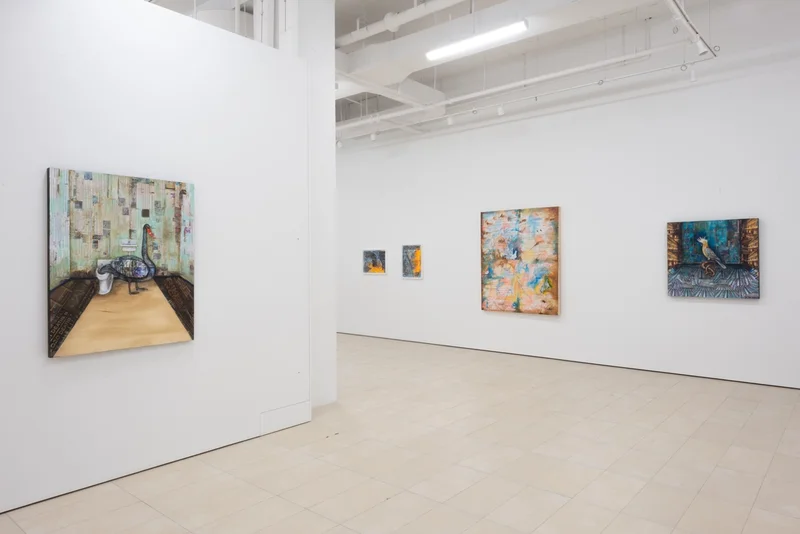
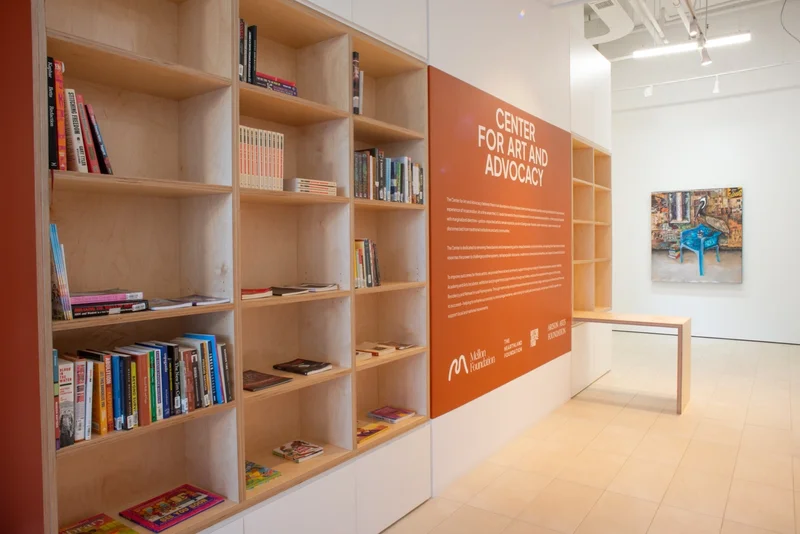
The Center for Art and Advocacy’s space is intentionally designed as an interdisciplinary hub that fosters community through film screenings, performances, readings and exhibitions. Its design reflects the ways in which people engage with creativity—through intimate reading spaces, collective gatherings and personal experiences with art—mirroring The Center’s broader mission of connection through artistic exchange. The Center is uniquely dedicated to presenting writing, film and visual art on equal footing, creating a space where these disciplines intersect seamlessly, making it a rare and vital cultural space in New York.
Current Exhibition
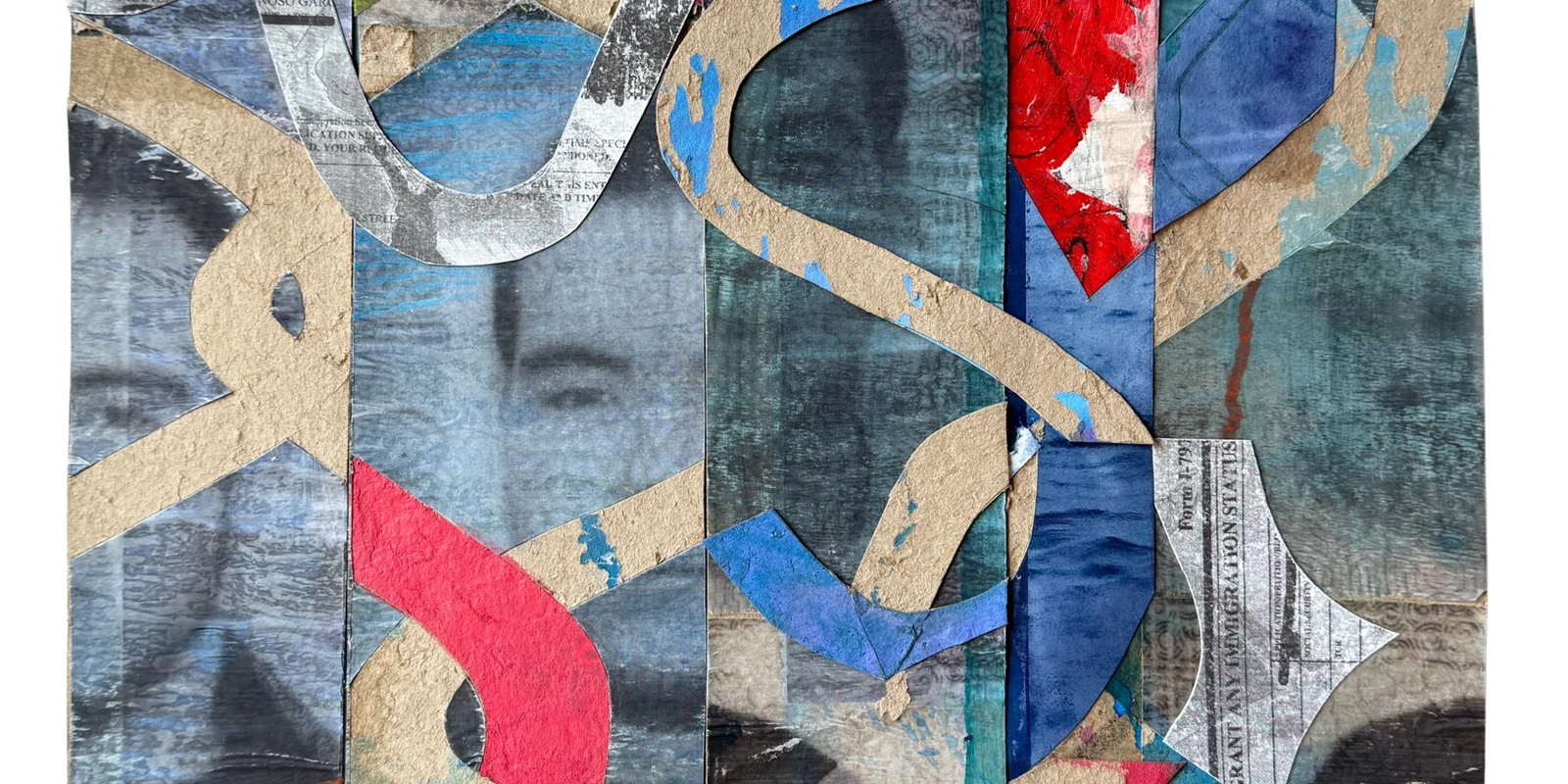
Constellations of Movement
October 15, 2026 - February 12, 2027
Opening Reception: October 15, 2026, 6 – 8pm
Public Events
Our public programs provide an opportunity for surrounding communities and the art world at large to take a deeper dive into the work of our fellows and exhibition related topics.
Current Events
No current events to display.
Upcoming Exhibitions
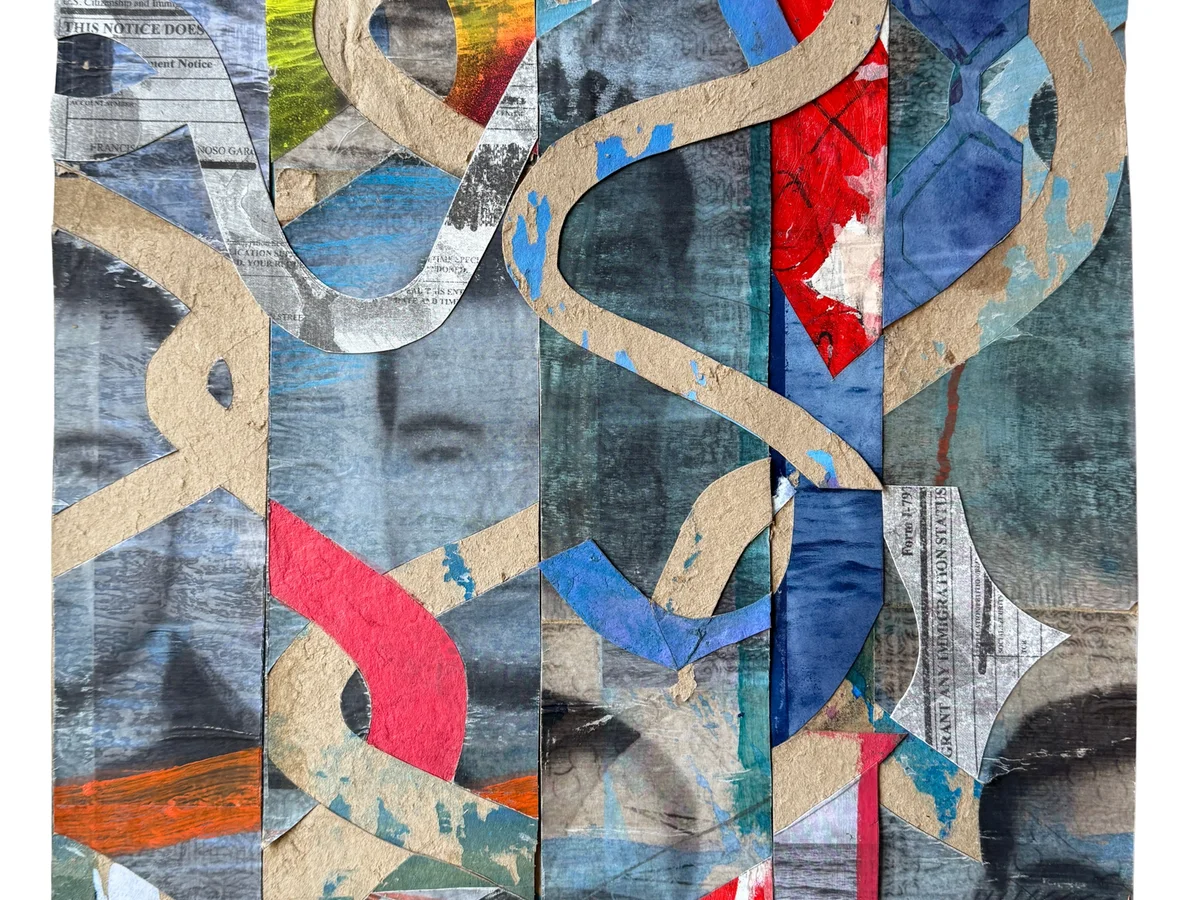
Constellations of Movement
October 15, 2026 - February 12, 2027
Opening Reception: October 15, 2026, 6 – 8pm
Past Exhibitions

A Language We Share: Beverly Price and Gordon Parks
March 20, 2026 - June 19, 2026
The Center for Art and Advocacy is pleased to announce A Language We Share: Beverly Price and Gordon Parks, an exhibition featuring an intergenerational dialogue between Beverly Price (2023 Center Fellow) and Gordon Parks, one of the most significant and impactful American artists of the 20th century.
Gilberto Rivera: Jailbirds
October 17, 2025 - February 20, 2026
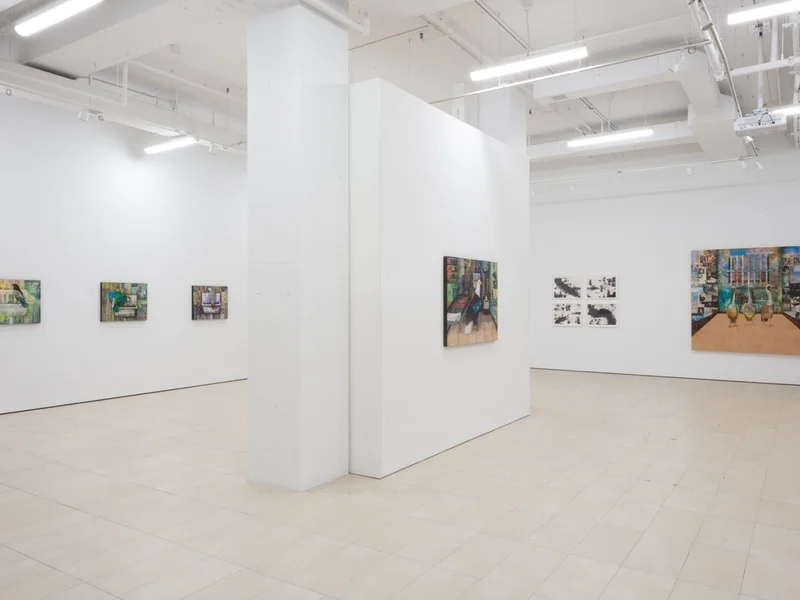
Jailbirds features new and recent work by Gilberto Rivera (2022 Center Fellow), whose practice is deeply shaped by his two decades of incarceration and the ongoing realities of subjugation that continue to shape communities beyond prison walls.
Collective Gestures: Building Community through Practice
March 27, 2025 - September 20, 2025
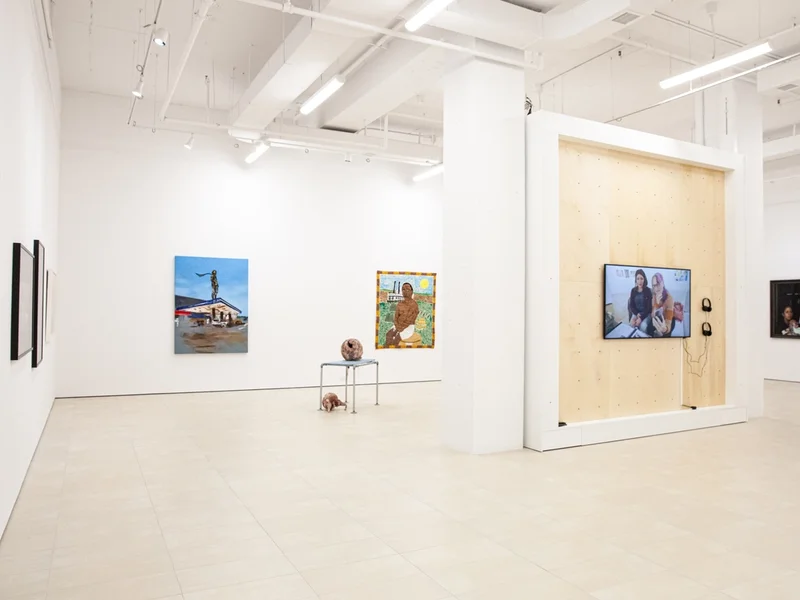
The Center for Art and Advocacy was proud to announce the grand opening of its flagship location at 22 Bancroft Place, in the historic Bedford-Stuyvesant neighborhood of Brooklyn, New York. Marking this milestone, The Center debuted its inaugural exhibition, Collective Gestures: Building Community through Practice, which highlights the transformative work of over 35 artists who have participated in The Center’s Fellowship Program.
Center for Art & Advocacy: a presentation of the work of nine justice-impacted artists.
August 1, 2023 - August 20, 2023
This exhibition was presented at Simon Miccio Gallery, Aspen, CO.
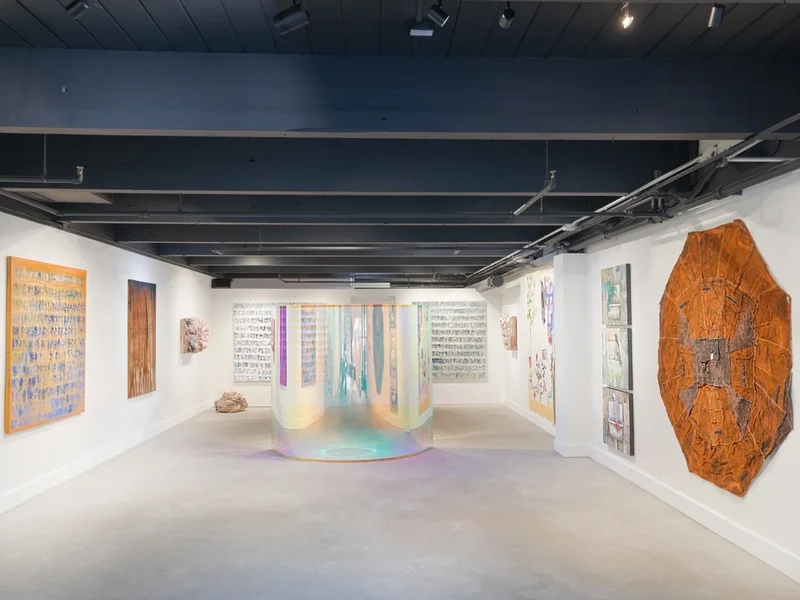
Featuring the work of 9 artists, the exhibition celebrated the gallery’s opening and brought together a group of groundbreaking artists impacted by the criminal justice system, whose creative practices are shifting the narrative around mass incarceration.
Participating Artists:
Courtney Cone, Russell Craig, Gary Harrell, Jesse Krimes, Marcus Manganni, Jared Owens, Beverly Price, Gilberto Rivera, Sherrill Roland.
Keeping Community
July 16, 2026 - September 25, 2026
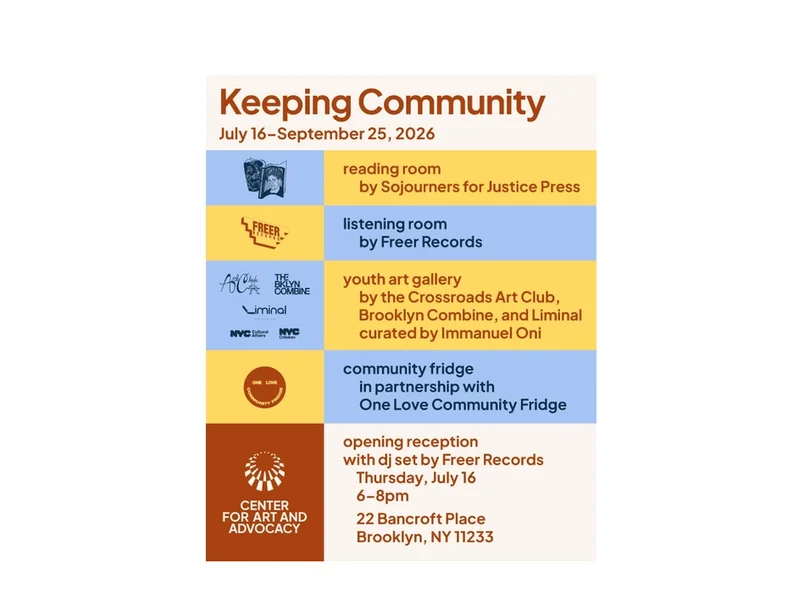
We are pleased to present Keeping Community, a series of pop-up programs, collaborations and partnerships that demonstrate our belief in liberation as a collective practice. Through community partnerships with organizations similarly situated at the intersection of creativity and justice, we will transform our gallery—originally conceived and designed to be modular and adaptive—into a multifaceted space for embodied and participatory experience. Keeping Community will feature a dedicated Reading Room curated by Sojourners for Justice Press, a Listening Room curated by Freer Records and a Youth Art Space featuring artworks created and inspired by Crossroads Juvenile Center youth through workshops led by teaching artists and creatives. In addition to these core components, we will also host a variety of other program offerings throughout the course of the summer, including workshops, book clubs and more.
Gilberto Rivera: Jailbirds
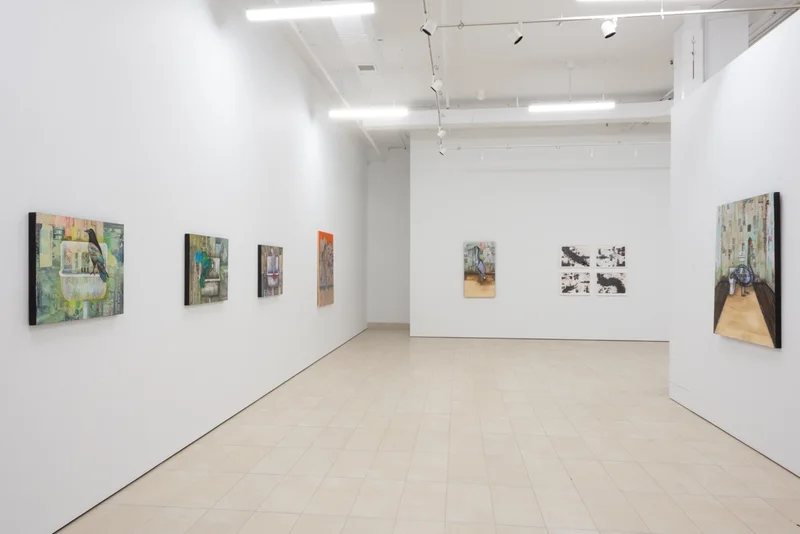
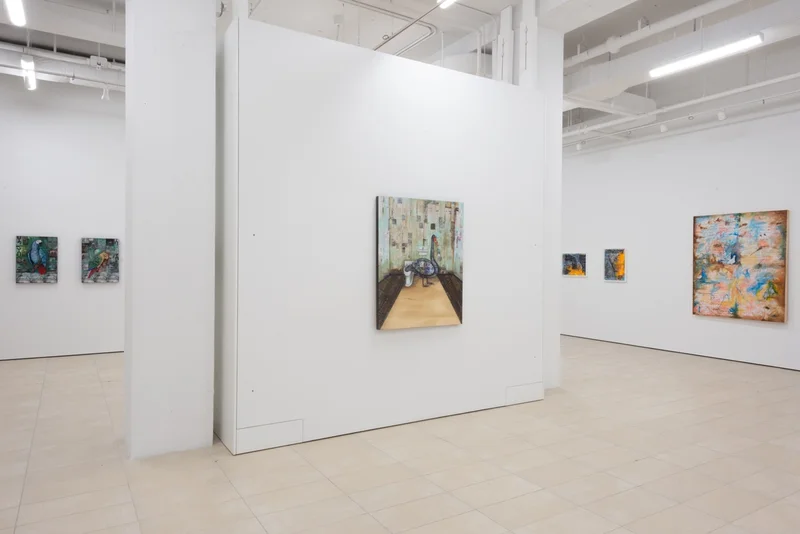
Jailbirds was an exhibition featuring new and recent work by Gilberto Rivera (2022 Center Fellow), whose practice is deeply shaped by his two decades of incarceration and the ongoing realities of subjugation that continue to shape communities beyond prison walls. Rivera’s work explores the psychological effects of solitary confinement, the entanglements of the U.S. criminal legal and immigration systems and the broader legacies of colonialism and exploitation embedded within the prison industrial complex. This will be the second exhibition and first solo presentation at the Center’s flagship location that opened in March 2025 as well as Rivera’s first ever solo presentation.
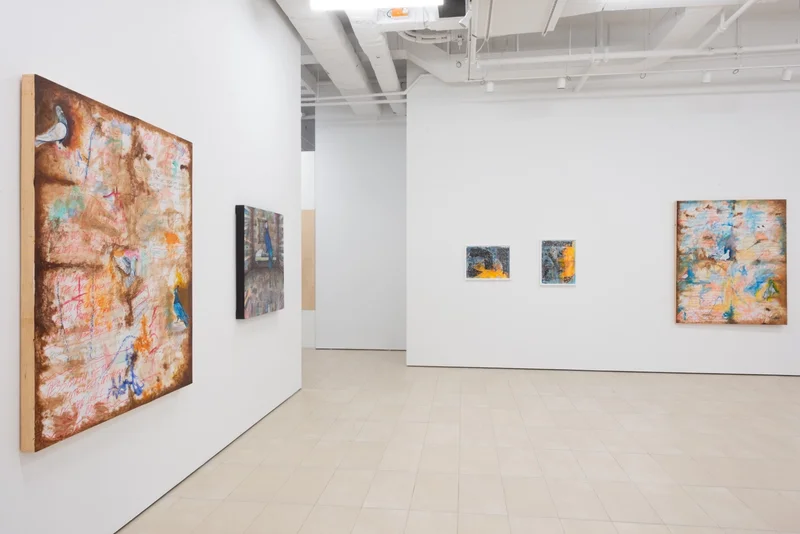
Rivera’s art is grounded in the formal possibilities and symbolic languages that lay at the heart of everyday material culture, from magazines and newspapers to textiles and traditional art materials. The found imagery and discarded objects he reanimates within his compositions are simultaneously layered with singular and collective significance, equally informed by the restrictions and subjugation of incarceration and both the historical struggles by Puerto Rican activists for justice and liberation as well as the contemporary diasporic ramifications. The movement from the personal to the political—from the individual to the social and back again—is a consistent element in Rivera’s work, one that steadily reveals how both are fundamentally intertwined. Through his construction of space and collaging of materials, Rivera creates new sensibilities and emergent meanings that often collapse the distinction between fine art and mass culture, a process the artist considers essential to the democratization of art and its making. This process also recalls the improvised wall collages of photographs and magazine clippings that circulate through prison cells, where fragments of mass media become tools for survival, imagination and the assertion of personal identity within a space designed for erasure. During his incarceration, Rivera formed an art collective with artists Jesse Krimes and Jared Owens, with whom he was incarcerated alongside.
In his Jailbird paintings, Rivera examines the social assumptions that often follow formerly incarcerated individuals, while also considering how different communities respond to the effects of the prison industrial complex. In each of his paintings Rivera reimagines the interior of a prison cell with crisp architectural lines and precise proportions, details informed by his background in construction. Instead of creating a stereotypically gray and drab space, Rivera describes these interiors as visually imaginative worlds, replete with text and layered images that would have been sourced from printed media and which he transforms through collage. The overlapping references to current events, popular culture and facets of the carceral experience reflect the way that our experience of reality—fragmented and partial—is always constructed and contextual just as we work to alter and adjust it.
At the center of each painting Rivera places a different bird or group of birds that introduce the idea of recidivism, or the expectation that formerly incarcerated people will eventually be incarcerated again. The birds also suggest the cyclical process of migration and by doing so they invoke the concept of the ‘jailbird’ with a special inflection, specifically the way people are made to move in and out of carceral institutions. Rather than allow this reductive assumption to limit the expressive potential of the paintings and the imagined yet absent subject they imply, Rivera creates spaces of kaleidoscopic color where image and text collide with one another to produce new meanings altogether.
Though each painting presents a vivid and distinct form of subjectivity and psychology, Rivera also uses their symbolic references to critique the federal prison system—as in a work that addresses the ongoing struggle to close Rikers Island—and comment upon the experiences of those being subjugated by it—as in another painting that reflects upon the growing number of women being incarcerated in the United States. In these works, his process of collaging media images that depict systems of oppression gives rise to environments where the birds seem at once to emerge from and vanish into their surroundings, underscoring how the system is designed for people to fail. In their captivity, the birds reflect the act of caging and confinement so central to carceral institutions, thereby both classifying and refuting their nature.
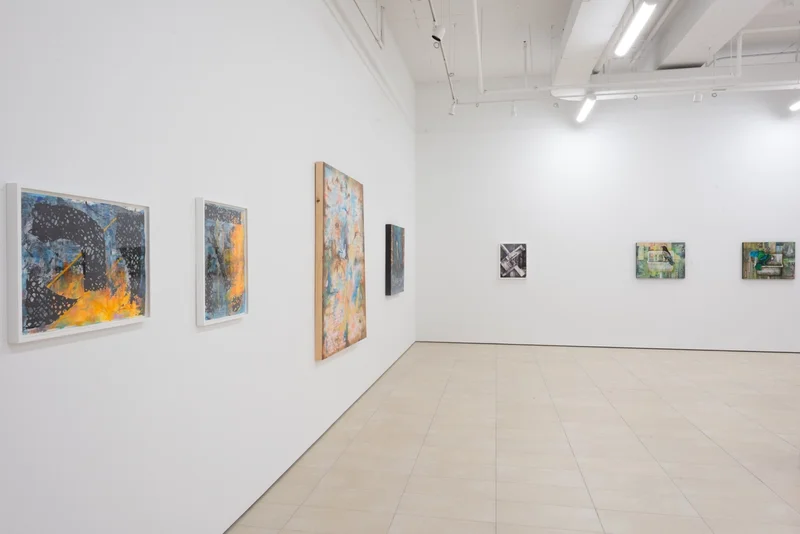
Jailbirds will also include a series of works on paper that further highlight Rivera’s interest in exploring abstraction as a form of liberation with an architectural sensibility. With compositions at once loose and freeform, at others solid and structural, Rivera infuses these spaces with saturated color and dramatic mark making, creating intimately scaled works that tie back to the artist’s earlier use of graffiti and provide a bridge to the conceptual rigor of the Jailbird paintings. Evoking different episodes from the history of abstract painting, his works on paper are dynamic and spacious, elegantly constructed and intricately finished. As in his paintings, Rivera affirms the redemptive and liberatory potential of art as a means for altering the world around us.
Grae Bowen / CKA.
Grae Bowen / CKA
Grae Bowen / CKA
Grae Bowen / CKA
Grae Bowen / CKA
Grae Bowen / CKA